
CONCRETE CEILING BREAKTHROUGH
The Concrete Ceiling Breakthrough Campaign is our chance to create change.
This three-year national campaign aims to:
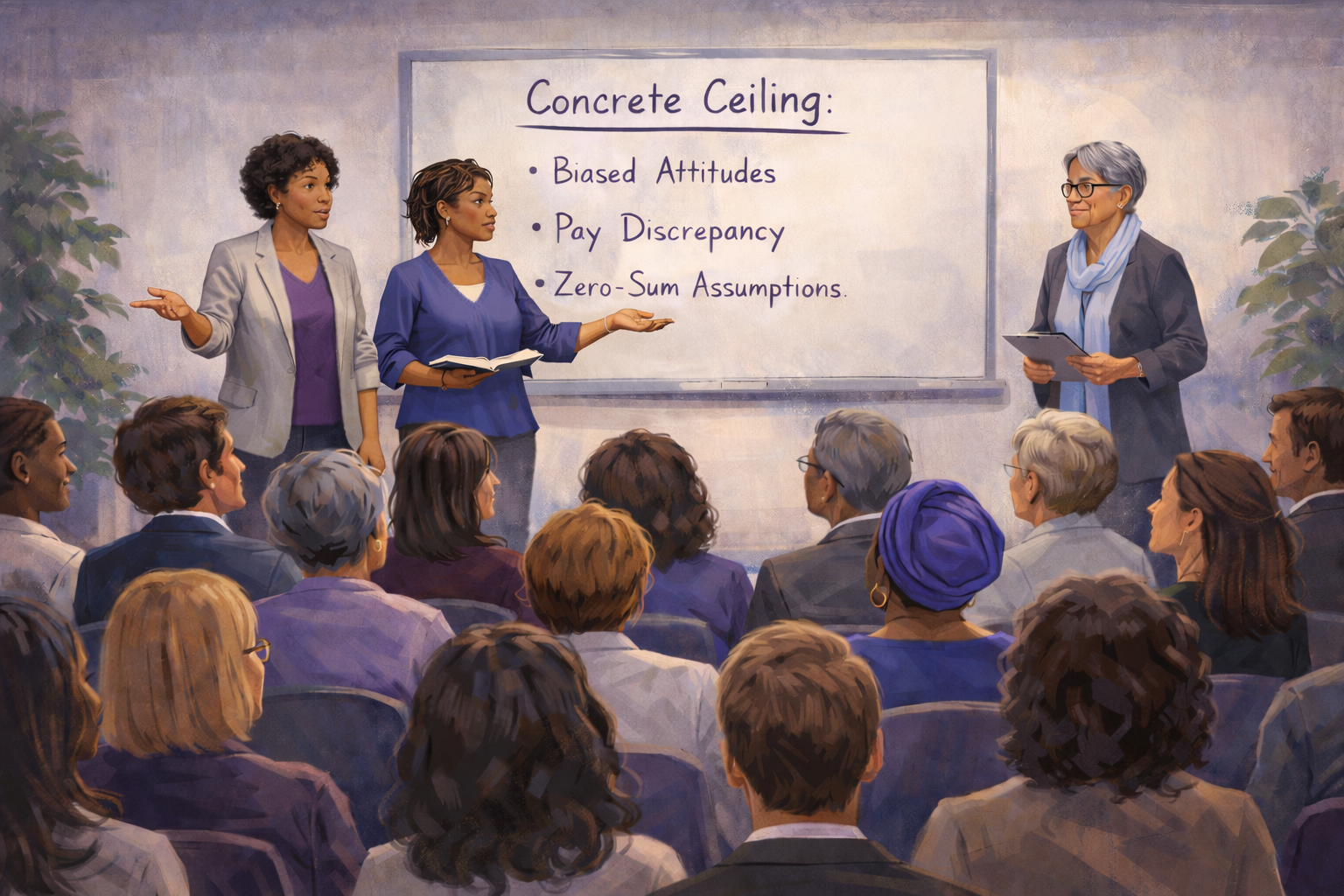
Popularize the concrete ceiling framework through strategic narrative change
Document 3,000+ Black women's workplace experiences through healing-informed story collection
Translate narratives into evidence-based toolkits for organizational transformation
Establish "concrete ceiling" as the professional standard for understanding Black women's workplace barriers

COMPONENTS
-
STORY COLLECTION
Evidence base for research findings and toolkit
-
COMMUNITY CONVERSATION
Quarterly learning series
-
STORY CIRCLES
Narrative collection engaging 3,000+ professionals
-
CONVENINGS & DATA GALLERY WALKS
Half-day in-person sharing and learning
-
TOOLKIT
Evidence-based organizational resource
-
MEDIA CAMPAIGN
75+ strategic placements
-
POLICY ADVOCACY
Congressional briefings, state legislation
WHAT IT LOOKS LIKE
Barriers to Workplace Advancement
-
White women may be doubted due to gender
Black men may be doubted due to race
Black women are doubted due to both simultaneously—and must constantly prove competence
-
White women labeled "too emotional"
Black men labeled "threatening"
Black women labeled "angry" OR "difficult"—stereotypes combining racial and gender biases
-
White women face glass ceiling at senior levels
Black men face barriers at multiple points but have some "similar to leadership" benefits
Black women face concrete ceiling from entry-level through executive—never getting sponsored, mentored, or advanced
-
White women earn 82 cents per White male dollar
Black men earn 87 cents per White male dollar
Black women earn 64 cents—the compounded penalty
WHAT IT CREATES / BARRIERS
Evidence of the Concrete Ceiling
-
38% of Black women hold bachelor's degrees or higher (most educated demographic in America)
Yet only 1% reach C-suite positions
-
Black women earn 64 cents for every dollar paid to White men
Even when controlling for education, experience, and industry, the gap persists
-
50%+ of Black women work in occupations where they're overrepresented
These are disproportionately lower-wage sectors (healthcare support, education, service)
-
54% report being "the only one" in their workplace
Experience highest "emotional tax" of any demographic group
36% intend to quit within 2 years due to barriers
-
58 Black women promoted per 100 men (lowest rate)
Face "broken rung" at entry to management—never getting first leadership opportunity